20 Amigurumi Eyes Ideas: Cute Crochet Eye Types, Placement & Pinterest-Ready Photos
Discover 20 amigurumi eye ideas to transform your crochet toys—safety, placement, styling tips and photo-ready inspiration to boost charm and Pinterest shares.

Choosing the right eyes can turn a simple amigurumi into a lovable character. In this post youll find 20 eye ideas with photos and close-ups to inspire every maker, from beginner to advanced. Whether you prefer safety eyes, embroidered eyes, felt appliqués, or button accents, I’ll walk through materials (safety eyes, yarn, embroidery floss, felt, needles, glue, and small buttons), recommended skill levels, and quick tips for secure attachment. Pinterest trends show that close-up photos, staged flat-lays, and step-by-step mini-collages get the most saves — so each idea includes photo-style suggestions to make your pins pop. Expect clear comparisons of look, durability, and safety for toys aimed at kids versus display-only pieces. Use these 20 eye variations to match personality, scale, and durability needs and get Pinterest-ready images that attract viewers and pattern fans.
Close-up Amigurumi Eye Detail — Materials, Stitches & Safety Tips
Materials: worsted or DK cotton/acrylic yarn for a smooth, defined fabric; 2.5–3.5 mm hook (go smaller than yarn label for dense stitches); 10–14 mm safety eye or flat-back acrylic eye; embroidery floss or contrast yarn for iris rings; polyester fiberfill (toy-safe), yarn needle, stitch markers and a small amount of fabric-safe glue (optional). Stitches & techniques: magic ring, single crochet (sc), invisible decrease (inv dec), increase (inc), slip stitch (sl st) and surface crochet or backstitch embroidery to form colored rings around the eye. Safety: fasten safety-eye washers fully and test for wobble; for toys intended for children under 3, replace plastic eyes with embroidered or securely appliquéd felt eyes to eliminate choking risk. Size: depending on hook/yarn tension expect a finished toy roughly 4–8 in (10–20 cm) tall; the close-up eye will suit a 12–14 mm eye or a 1–1.5 cm embroidered pupil. Tips: work tight stitches to hide stuffing, insert eyes before stuffing, use a stitch marker for rounds, weave and double-sew tails inside seams, and reinforce high-stress joins for durability.
Amigurumi Crochet Eyes — Materials, Stitches, Size and Safety Tips
These realistic amigurumi eyes are crocheted and embroidered for a glossy, dimensional look. Materials: sport to DK-weight cotton or acrylic yarn for eyelids, small scraps of contrasting yarn for the iris, a 2.5–3.5 mm hook (adjust for gauge), polyester fiberfill, tapestry needle, stitch marker and optional safety eyes or flat glass cabochons. Stitches: start with a magic ring, work single crochet increases for a smooth disc, change colors for the iris, use surface slip stitch or single crochet around the rim for the eyelid, and invisible decreases to close. Size: each eye will finish around 2–3 cm (0.8–1.2 in) diameter depending on yarn/hook; the complete amigurumi will typically be 10–20 cm (4–8 in) tall. Safety: for toys intended for children under 3, avoid removable safety eyes — embroider pupils securely and hide knots; if you use safety eyes, attach washers and add a dab of craft glue for extra security. Tips: keep a tight tension to prevent stuffing showing, mark placement before sewing, stuff lightly for realistic shape, and use contrasting embroidery floss for fine iris detail.
Blue Amigurumi Frog with Glass Safety Eyes — Crochet Materials & Tips
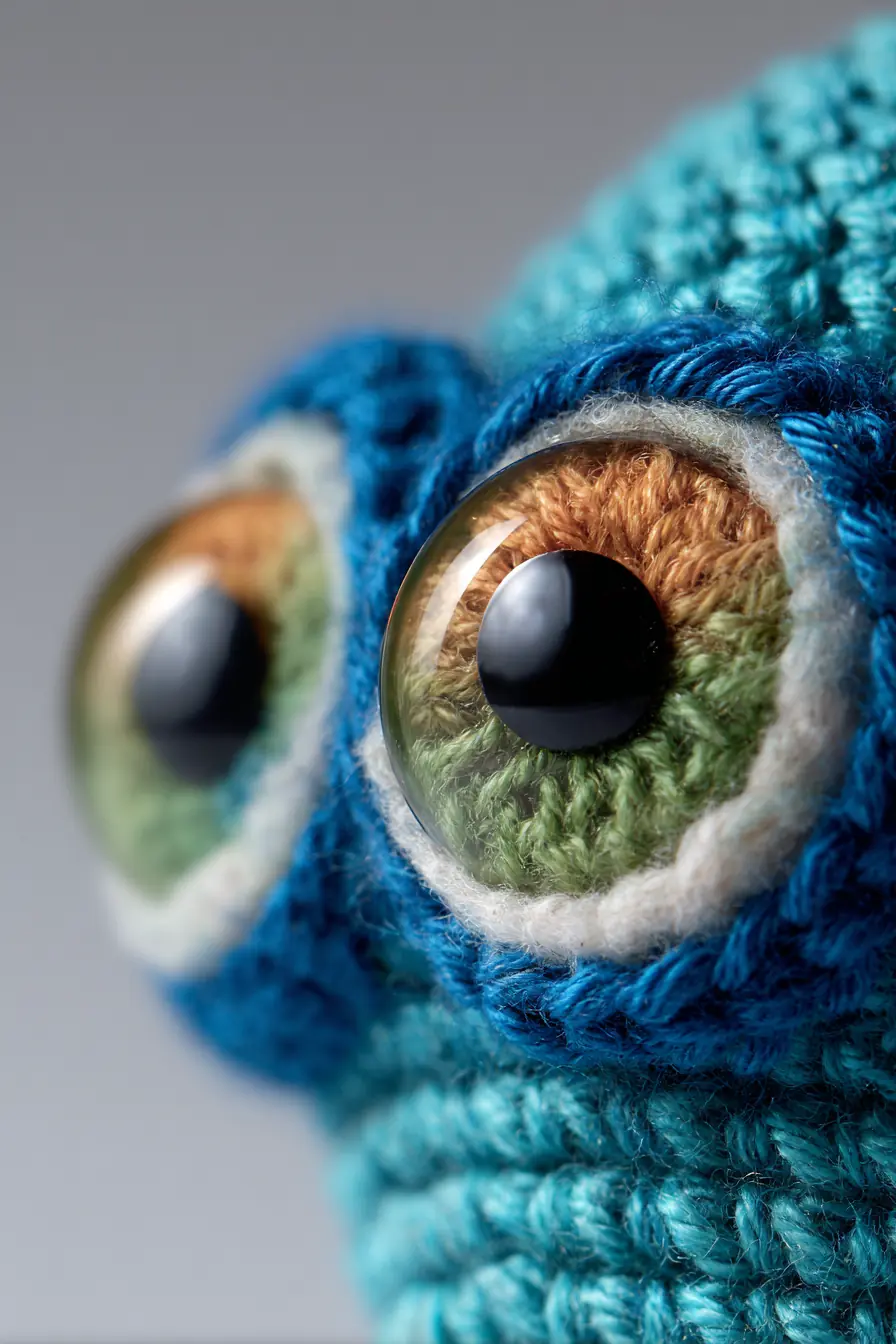
Materials: DK or worsted-weight cotton/acrylic yarn in turquoise and accent colors, 2.5–4.0 mm crochet hook (choose slightly smaller for a firmer fabric), 12–20 mm glass or plastic safety eyes with washers, polyester fiberfill, yarn needle, stitch marker, scissors and optional felt or embroidery thread for eye details. Stitches used: magic ring, single crochet (sc), increase (inc), decrease (dec) or invisible decrease, and slip stitch (sl st) for finishing. Safety: attach safety eyes before stuffing and secure with locking washers; for toys intended for children under 3, replace safety eyes with embroidered eyes or felt appliqués to eliminate choking hazards. Double-check seams and knot ends securely. Size: using worsted yarn and a 3.5 mm hook this piece will be approximately 10–15 cm (4–6 in) tall — adjust yarn weight and hook to scale up or down. Tips: maintain tight tension for no-stretch stuffing gaps, place and pin eyes before final stuffing to get symmetry, stuff firmly but evenly, use a stitch marker to track rounds, and weave in tails neatly. For more expressive eyes, layer yarn colors or add a tiny hand-stitched highlight.
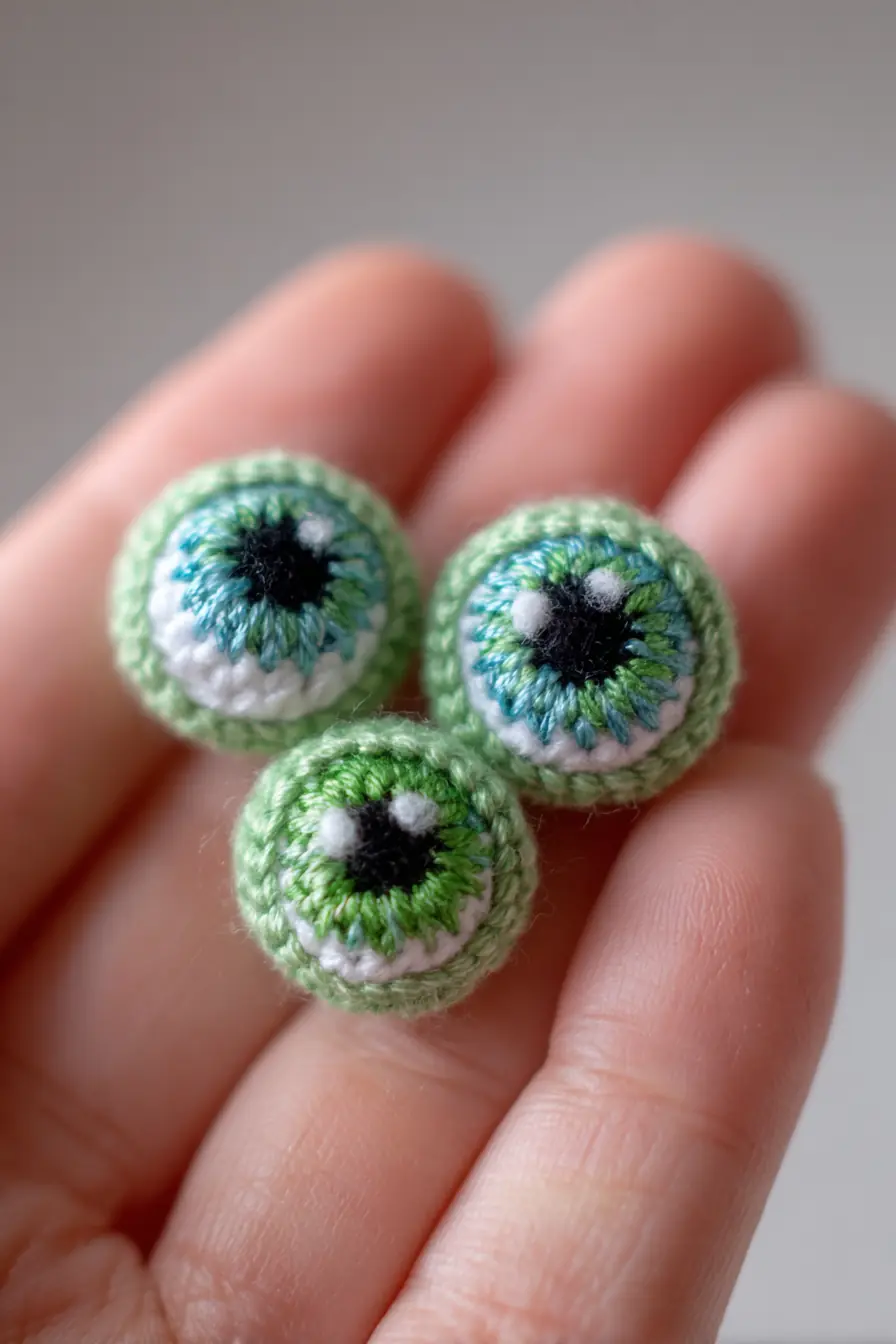
Mini Crochet Amigurumi Eyes — Tiny Green Embroidered Doll Eyes
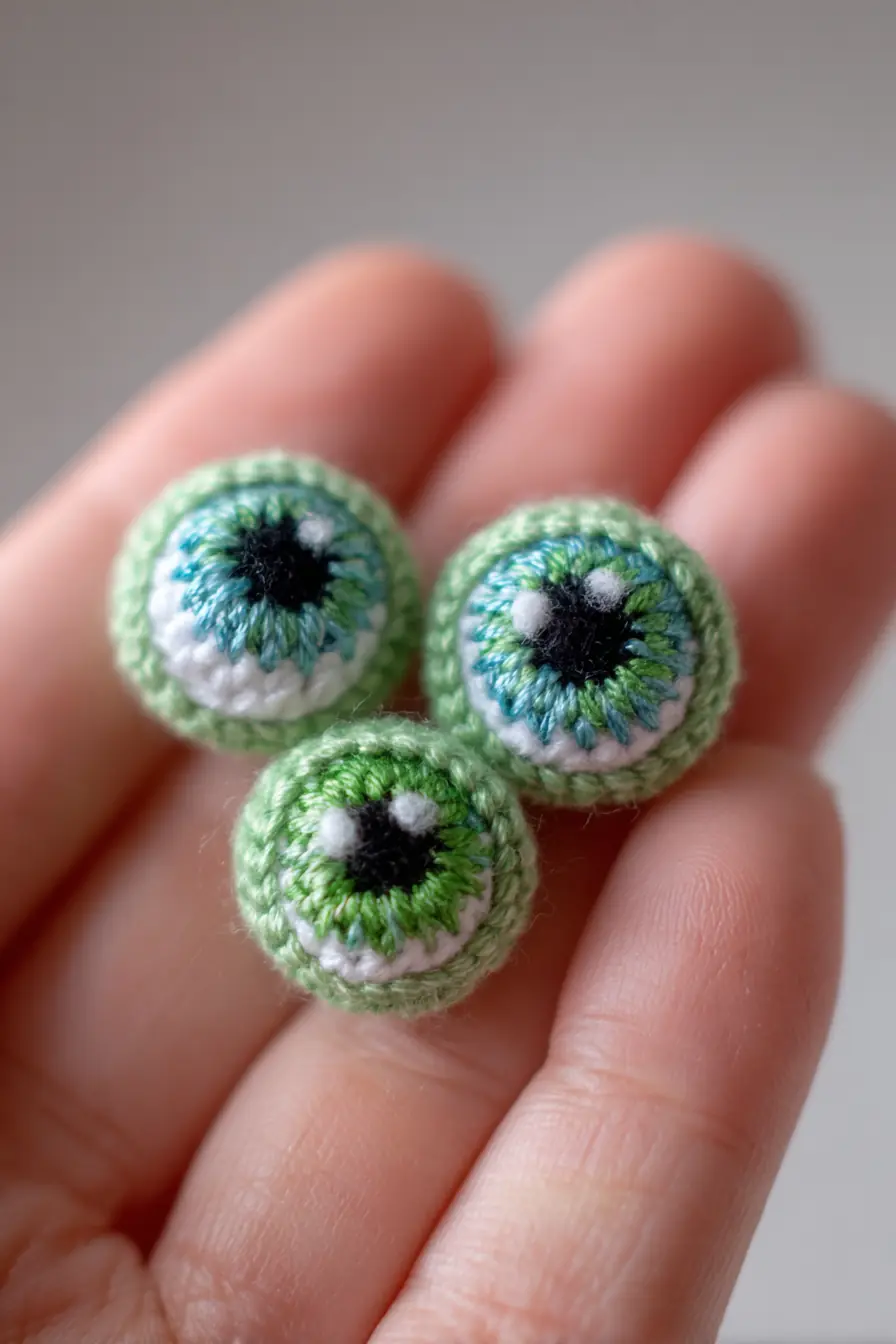
These tiny amigurumi eyeballs are crocheted in fine cotton for crisp stitch definition and embroidered highlights for character. Materials: fingering/4-ply or sport weight cotton yarn in white, green, teal and black; 2.0–2.5 mm crochet hook (or size to get a tight gauge); small amount of polyfill; tapestry needle; embroidery needle and thread for highlights; optional safety eyes or fabric glue. Key stitches: magic ring, single crochet (sc), invisible increase/decrease, slip stitch (sl st) and simple surface embroidery (backstitch or French knot) for the pupil and catchlights. Safety: for toys intended for children under 3, avoid removable or glued-on parts — embroider pupils firmly and weave ends deeply; small pieces are a choking hazard. Size: finished diameter is typically 1–1.5 cm (0.4–0.6 in) depending on yarn and hook. Tips: crochet tightly to keep stuffing contained, embroider the pupil before final stuffing for cleaner work, use cotton for smooth color changes, and block lightly or press with steam to even stitches. Secure all tails and reinforce with a small dab of fabric glue inside if using non-child toys.
Amigurumi Eyeballs Crochet Pattern — Materials, Stitches & Safety Tips
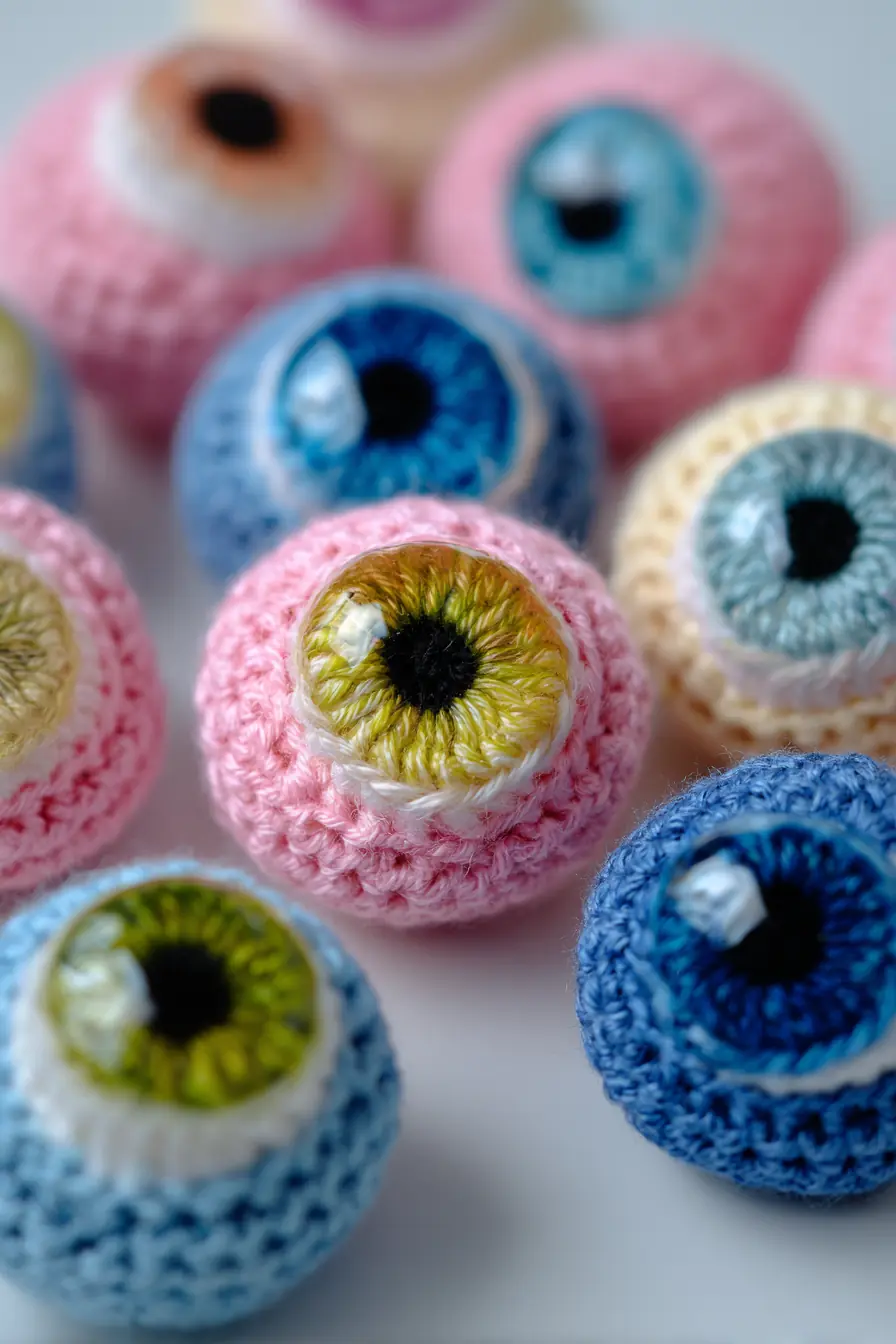
Soft, round amigurumi eyeballs crocheted from cotton or cotton-blend yarn create smooth colorwork and crisp stitch definition. Recommended materials: sport–worsted weight cotton, 2.5–3.5 mm hook (adjust for gauge), polyester fiberfill, tapestry needle, stitch marker, and either embroidered irises or small safety eyes with washers. Core stitches: magic ring, single crochet (sc) in continuous rounds, standard increases and decreases to shape the sphere, slip stitch joins for finishing, and surface crochet or embroidery for iris detail. Size: finished diameter typically falls between 4–6 cm (1.5–2.5 in) depending on yarn weight and hook size. Safety notes: for toys intended for children under 3, avoid plastic safety eyes — embroider the pupil and highlight instead, securely weave and knot ends, and consider inserting felt backing or safety discs. Tips: maintain a tight gauge to prevent stuffing leakage, use a stitch marker to track rounds, stuff firmly and evenly, blend yarn colors for realistic irises, and tack the iris to the sphere before final stuffing to keep it smooth. Block lightly or steam to settle stitches if needed.
Crochet Amigurumi Cat Eyes — Tiny Blue & Gold Detailed Embellishments
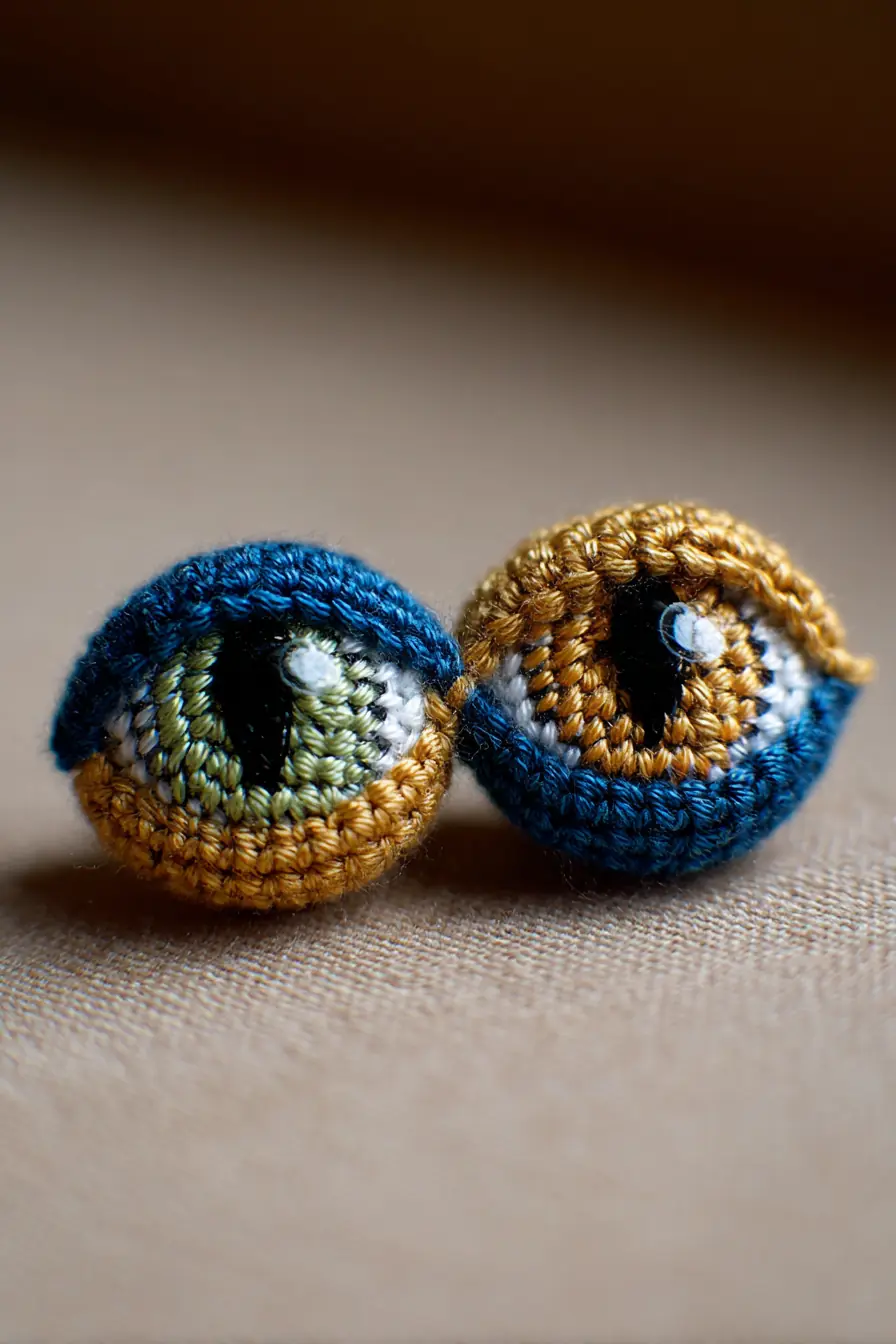
Tiny crocheted amigurumi eyes worked in blue, gold and green tones for realistic cat-like pupils. Materials: fine cotton or cotton-blend yarn (fingering/4-ply or mercerized crochet thread), size 1.75–2.5 mm crochet hook, tapestry needle, small amount of polyfill or felt backing, and optional fabric glue. Stitches used: magic ring, single crochet (sc), increases (inc), invisible decrease (dec), slip stitch (slst) and surface crochet or embroidery for the eyelid and highlight. Safety: for toys intended for babies, embroider the pupil and highlight instead of using plastic safety eyes; if you use safety eyes, they are recommended only for ages 3+ and must be secured with washers and extra stitching. Size: finished pieces are approximately 2–3 cm (0.8–1.2 in) across depending on yarn and hook. Tips: work tightly to avoid stuffing showing through (use a slightly smaller hook than yarn label suggests), use a stitch marker to keep rounds even, weave in tails securely or back with a felt circle, and add a tiny white French knot or stitched dot to sell the glossy eye effect.
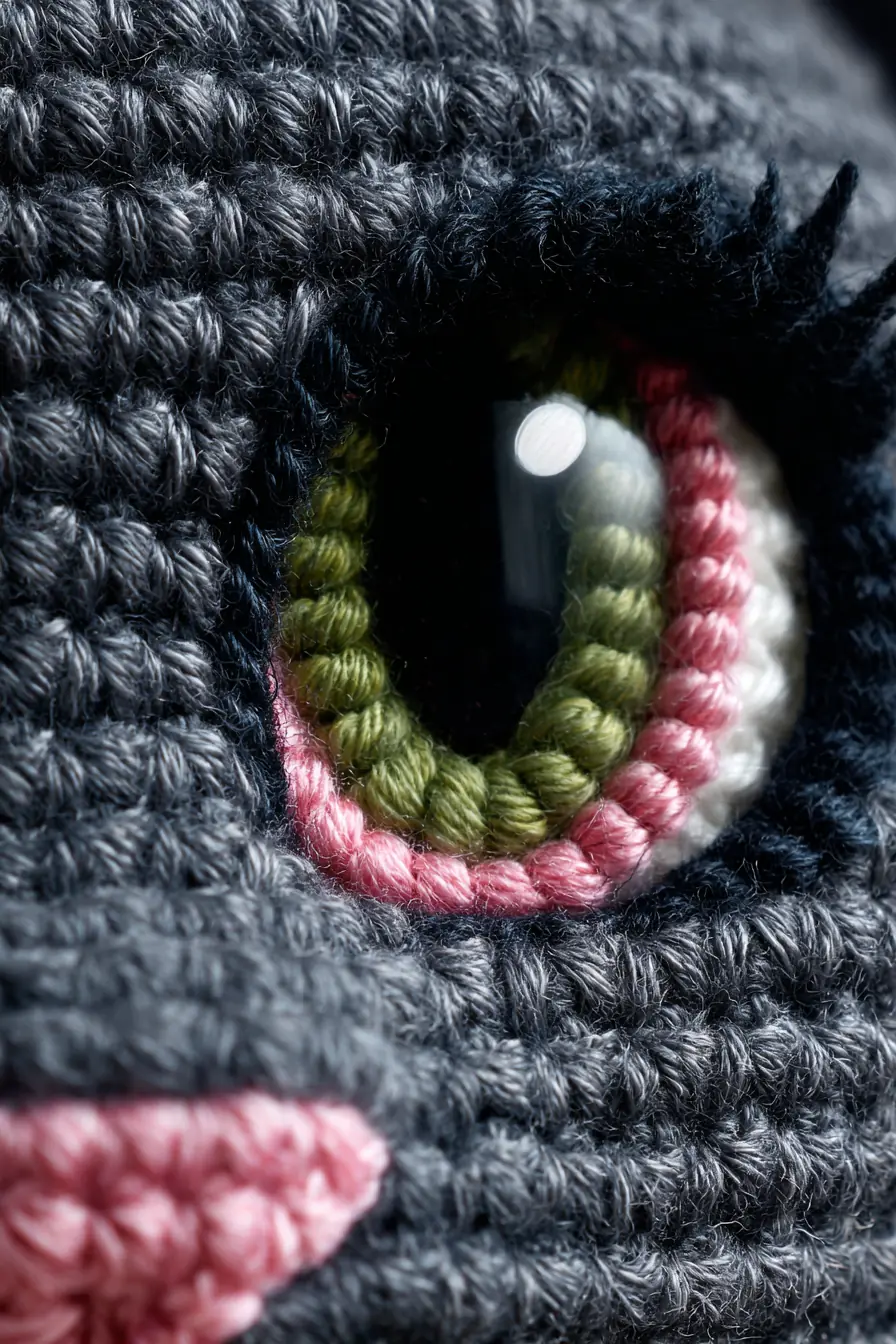
Embroidered Amigurumi Eye: Crochet Iris and Lacy Eyelid Tips
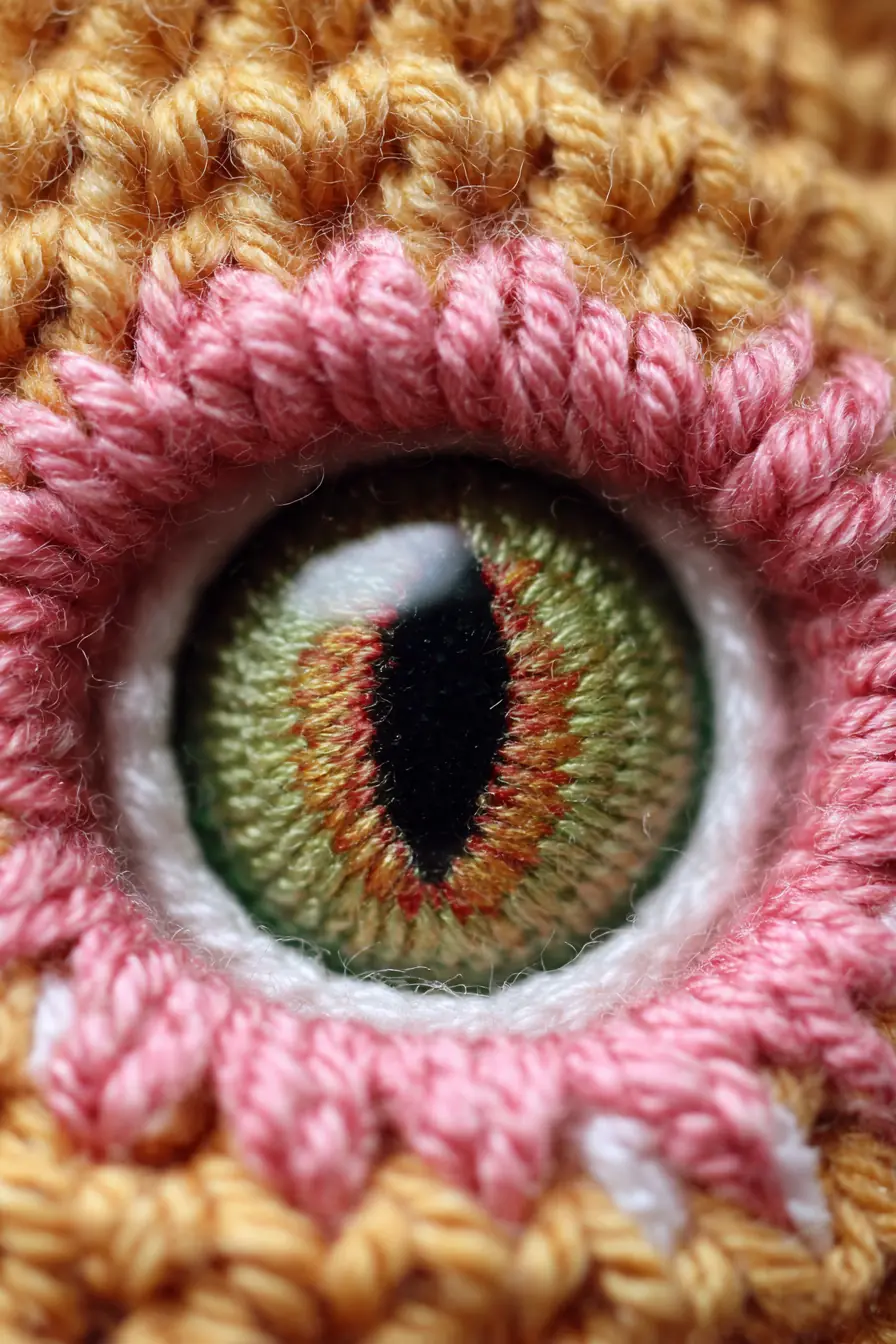
Materials: medium-weight (Worsted/Aran) cotton or cotton–acrylic blend yarn in three colors (base, eyelid, highlight), 3.5–4.0 mm crochet hook, polyester stuffing, yarn needle, stitch marker, optional safety eyes or felt/embroidery thread for detailed iris. Stitches and techniques: worked in continuous rounds with single crochet (sc), increases (inc) and invisible decreases (inv-dec) to shape the eye socket; back-loop-only (BLO) rounds for a ridged eyelid; surface crochet or slip-stitch edging for the pink lashes; embroidery or duplicate stitch to build iris detail; picot or small puff stitches create textured lashes. Safety: for toys intended for children under 3, avoid detachable safety eyes—embroider the eye or use securely sewn felt. Fasten and weave in all ends, and use a sturdy washer if using commercial safety eyes. Size and finishing: typical finished amigurumi head with this eye is 12–18 cm tall; a sewn/embroidered iris like the one shown is usually 20–25 mm diameter. Stuff firmly but not overfilled to keep shape. Tips: work slowly on color changes to keep tension even, mark round starts, use a blunt needle for embroidery, and block or lightly steam the finished piece to smooth stitches.
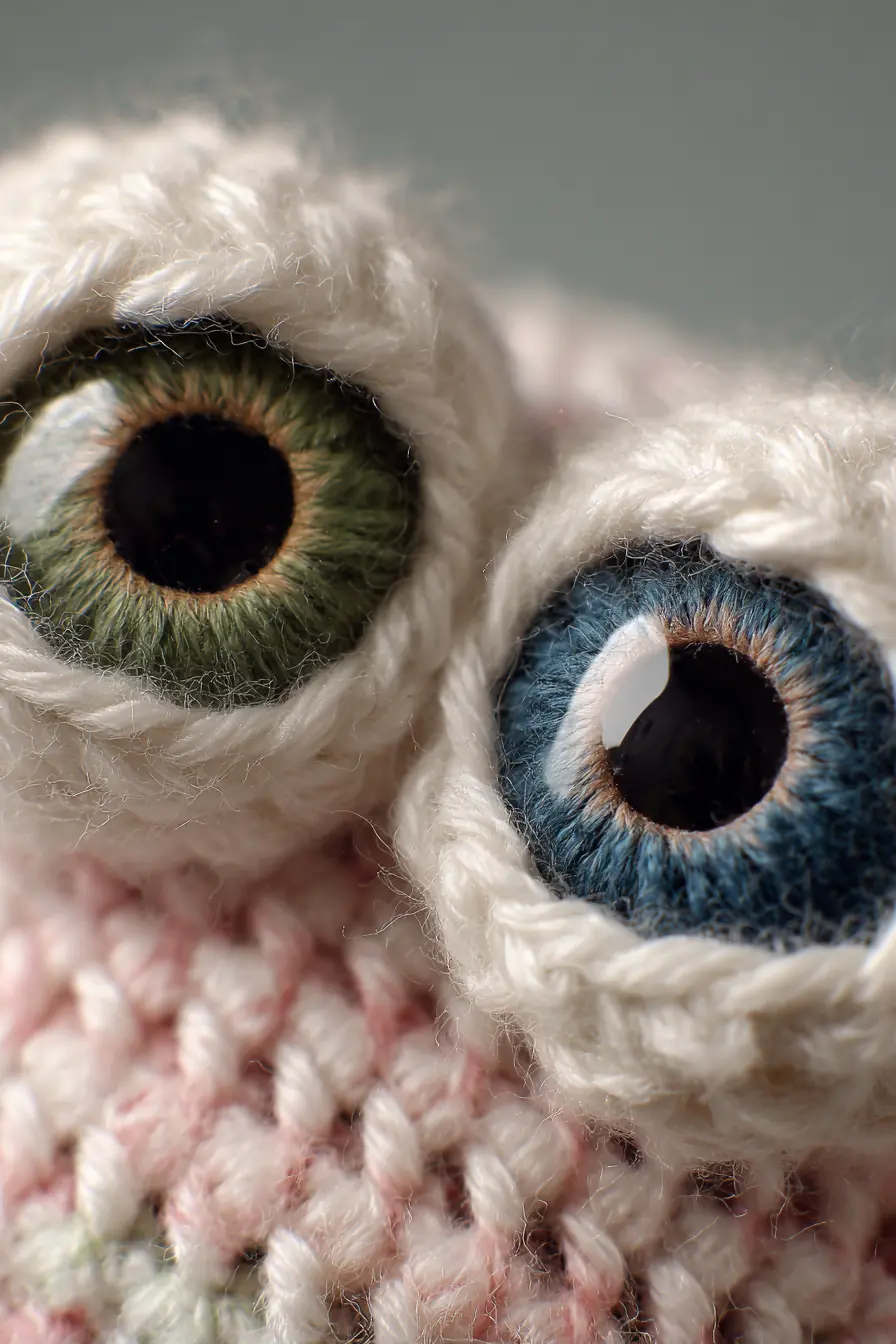
Amigurumi Crochet Eye Pattern — Embroidered Iris & Eyelashes
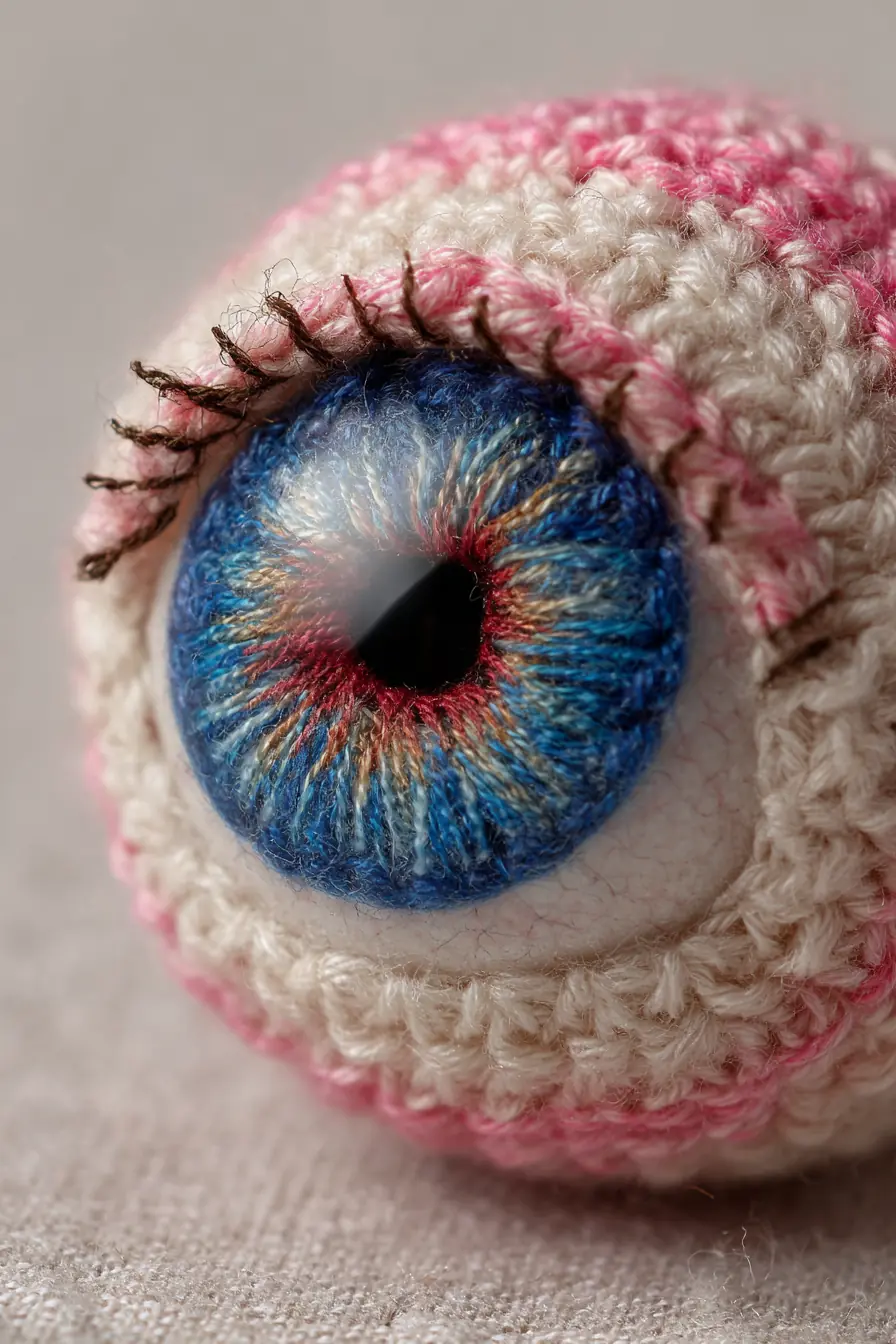
This compact amigurumi eye combines a crocheted eyeball and a richly textured, embroidered iris for realistic depth. Materials: DK/worsted weight acrylic or cotton yarn in white/cream and multicolor blue, small contrast yarn for lashes, 2.5–3.5 mm crochet hook, tapestry needle, polyester stuffing, optional 12–20 mm safety eye or black yarn for pupil, sewing needle and thread. Stitches used: magic ring, single crochet (sc), invisible decrease (invdec), increases (inc), slip stitch (sl st), surface crochet or radial embroidery stitches for the iris. Safety: if the toy is intended for children under 3, avoid loose safety eyes and eyelashes — embroider the pupil and trim or tightly sew short lashes; always secure washers and knot ends inside the head. Size: finished eye will be about 4–6 cm (1.5–2.5) across depending on yarn and hook. Tips: work the iris as a separate flat disc and embroider radial strands before attaching to the eyeball, stuff firmly but not overstuffed, use a stitch marker to keep even rounds, and blend yarn colors with short carries or stranded embroidery for lifelike depth.
Amigurumi Cat Eye Crochet — Tiny Crochet Cat Eye Keychain (with Safety Tips)
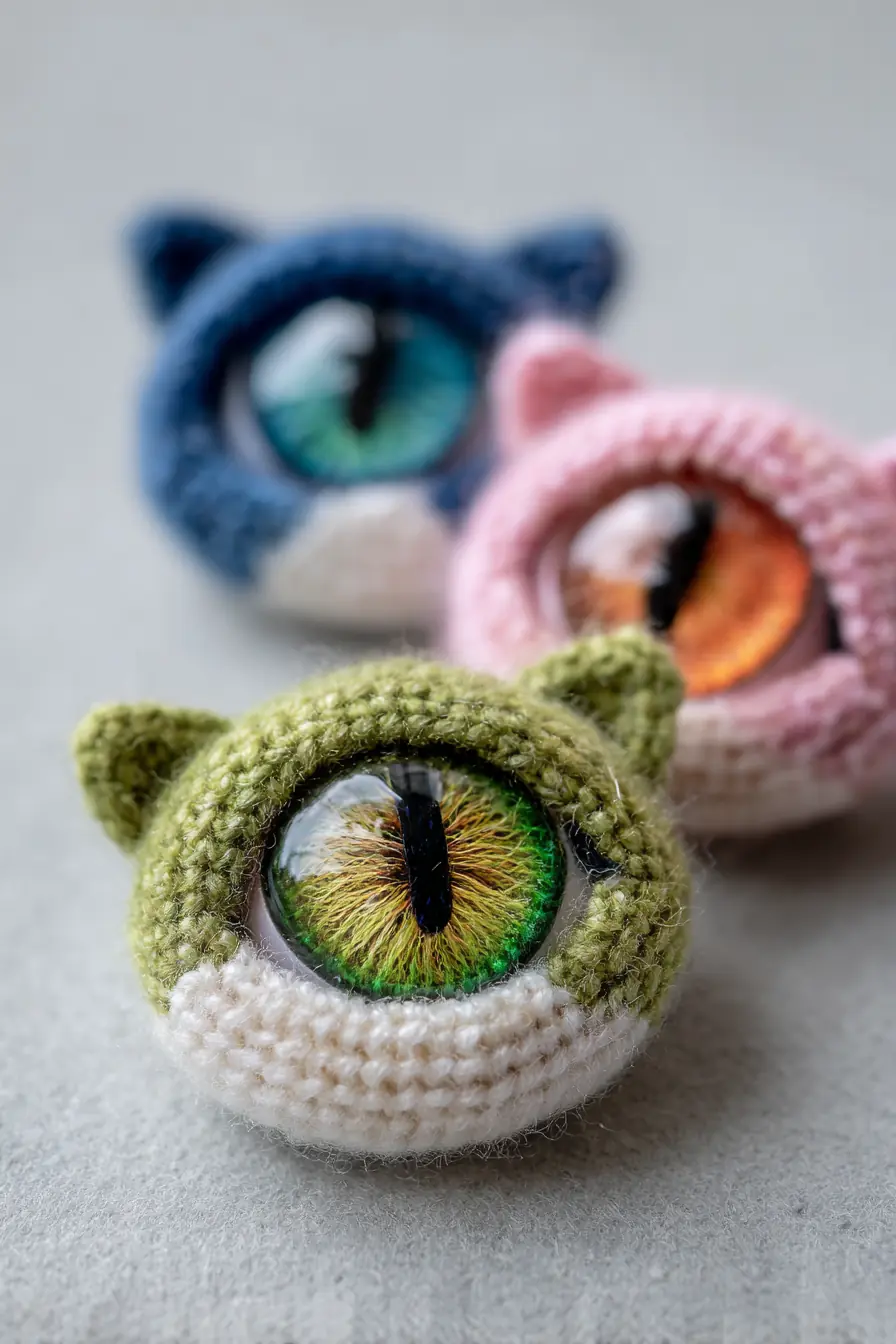
This tiny amigurumi cat eye uses a glass or resin cat-eye cabochon (20–30 mm) set into a crocheted bezel to create a realistic, pupil-slit focal point. Materials: DK/light worsted acrylic or cotton yarn, 2.5–3.5 mm hook (use a hook one size smaller than yarn label for tight stitches), 20–30 mm cat-eye cabochon or safety eye, polyester fiberfill, tapestry needle, stitch marker, scissors, optional keyring or felt backing. Stitches used: magic ring, single crochet (sc), increases (inc), invisible decreases (inv dec), slip stitch (sl st), and single crochet around the bezel. Size: finished diameter ranges from about 4–6 cm depending on eye size (25 mm eye ≈ 5–6 cm). Safety: if giving to children under 3, avoid glass/resin eyes—embroider pupils or use securely fastened, tested safety eyes with washers; glue alone is not sufficient. Tips: keep gauge tight—use a smaller hook and stuff firmly to avoid gaps; stitch the bezel snugly around the cabochon before closing; shape ears by short increases/decreases and stitch them flat. For extra stability, sew a felt circle over the back or add a keyring loop while closing the last rounds.
Amigurumi Crochet Eyes — Materials, Stitches, Size & Safety Tips
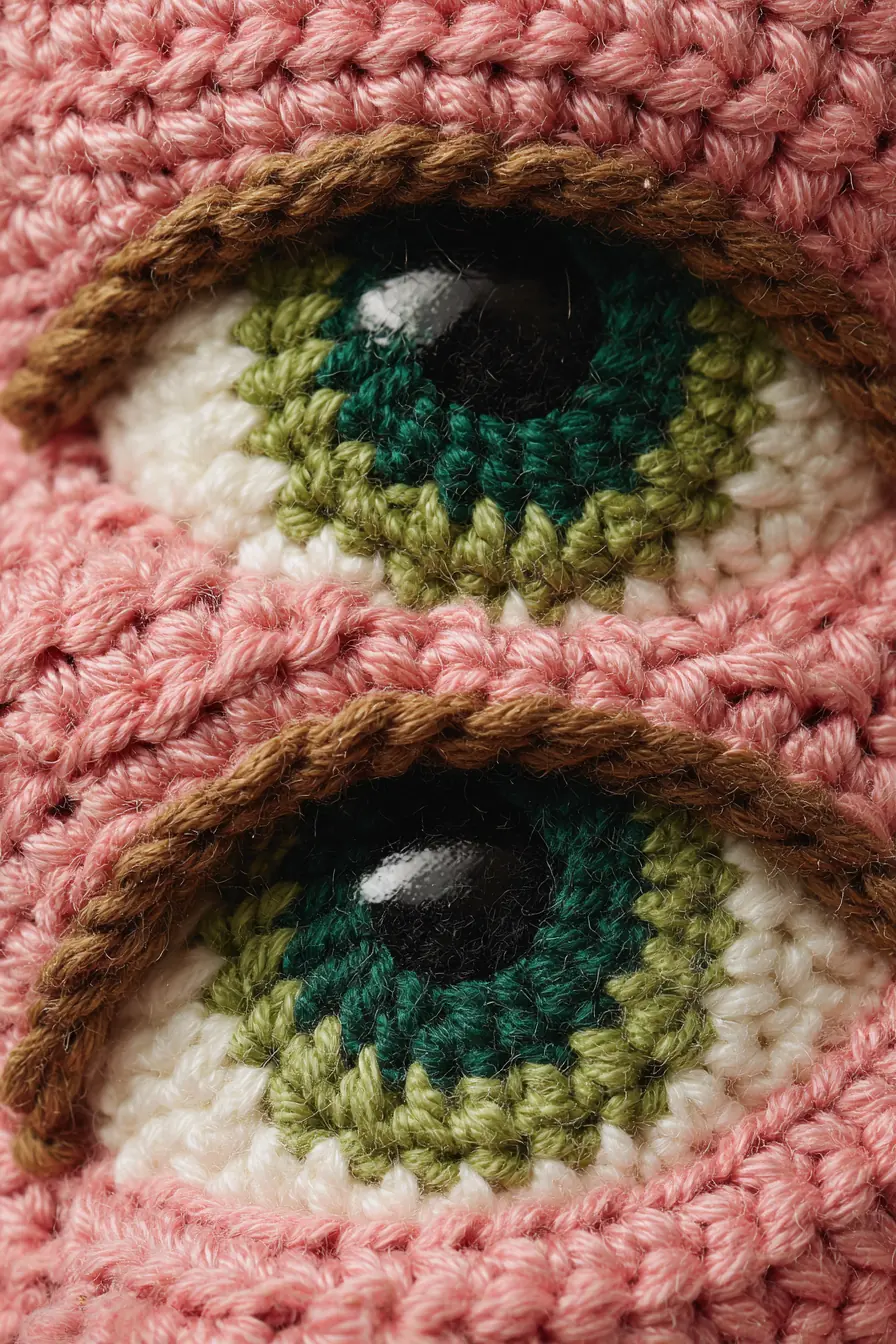
This close-up shows a layered amigurumi eye appliqué with a green iris, white sclera and a raised brown eyelid set into pink fabric. Materials: sport/DK weight cotton or cotton-blend yarn for crisp stitch definition, small black safety eye (10–12 mm) or black embroidery floss for a sewn pupil, 2.5–3.5 mm crochet hook, tapestry needle, stitch marker and optional small polyester stuffing for a slightly domed iris. Stitches & techniques: magic ring, single crochet (sc), increases/decreases for round shaping, color changes joined with slip stitches, and surface crochet or chained edging to form the raised eyelid. Size: an individual iris ring is typically 2.5–3.5 cm across; the finished eye unit including eyelid measures roughly 4–6 cm depending on yarn and tension. Safety notes: use locking safety eyes with washers for toys intended for children 3+, or embroider pupils and sew appliqués flat for baby-safe pieces. Tips: crochet tightly to avoid gaps, weave and trim yarn ends into the back, pin and check symmetry before sewing, and block pieces lightly for neater joins and consistent sizing.
Amigurumi Crocheted Eyes & Soft Body — Materials, Stitches and Safety Tips
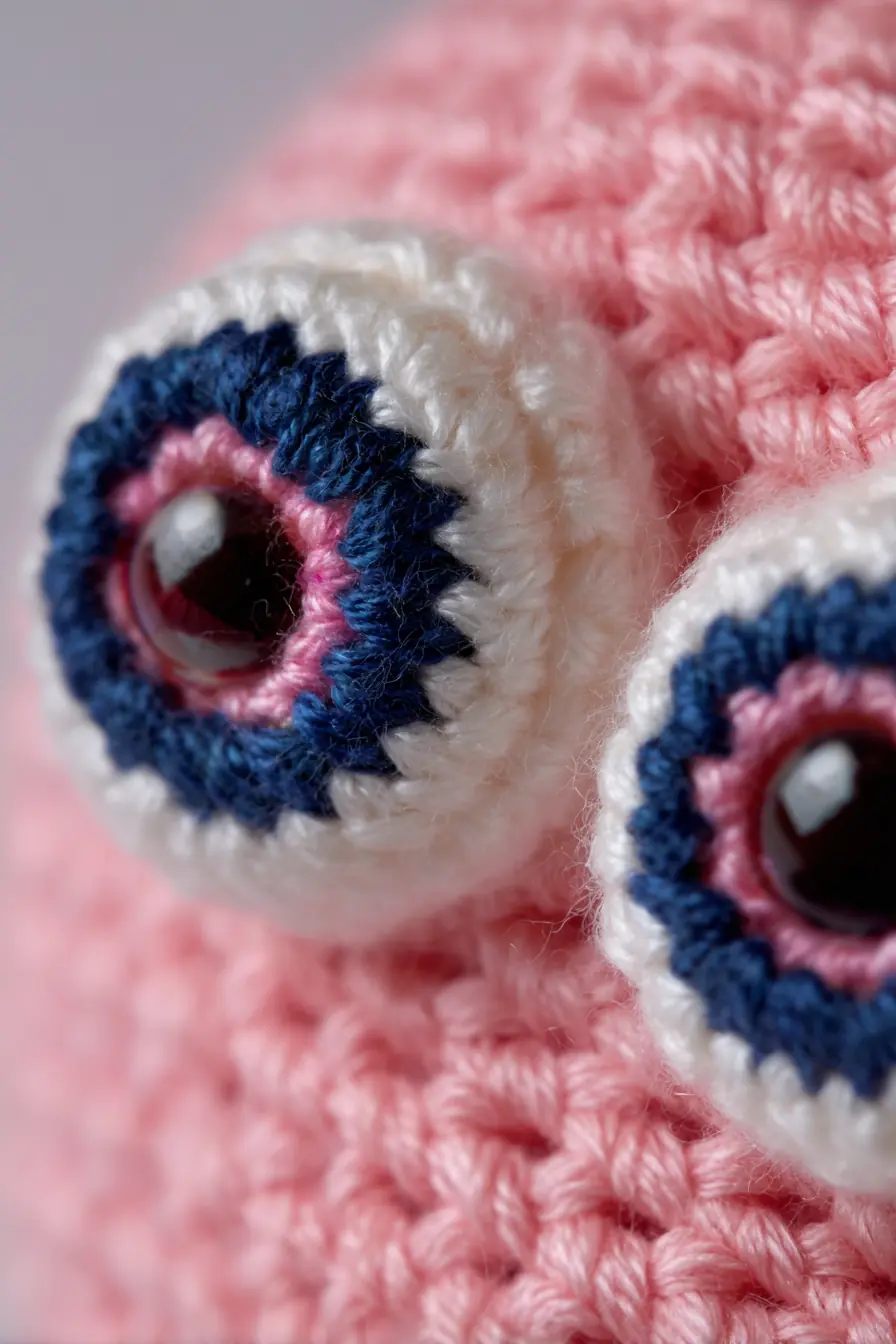
This close-up amigurumi shows small crocheted eyeballs set into a soft, tightly worked body. Materials: DK/worsted weight cotton or acrylic yarn in three colors, a 2.5–3.5 mm hook (choose smaller for tighter fabric), 6–10 mm safety or glass eyes (or embroidery thread for baby-safe toys), polyester fiberfill, yarn needle, stitch markers and scissors. Core stitches and techniques: magic ring, single crochet (US sc) worked in continuous rounds, basic increases and decreases, color changes to create concentric irises, and slip stitches to finish. Size: finished toy will vary by yarn and hook but typically measures about 10–15 cm (4–6 in) tall; each crocheted eyeball is roughly 2–3 cm (0.8–1.2 in) across. Safety and finishing tips: for children under 3, replace safety/glass eyes with embroidered pupils and weave ends securely inside the stuffing; if using safety eyes, attach washers tightly and double-stitch around the base. Maintain tight tension and stuff firmly to avoid lumps. Extra tips: use a smaller hook than recommended for the yarn to close gaps, mark round starts with a stitch marker, and use a ladder stitch to close openings invisibly.
Tiny Crocheted Eyeball Amigurumi — Pattern Tips, Materials & Safety
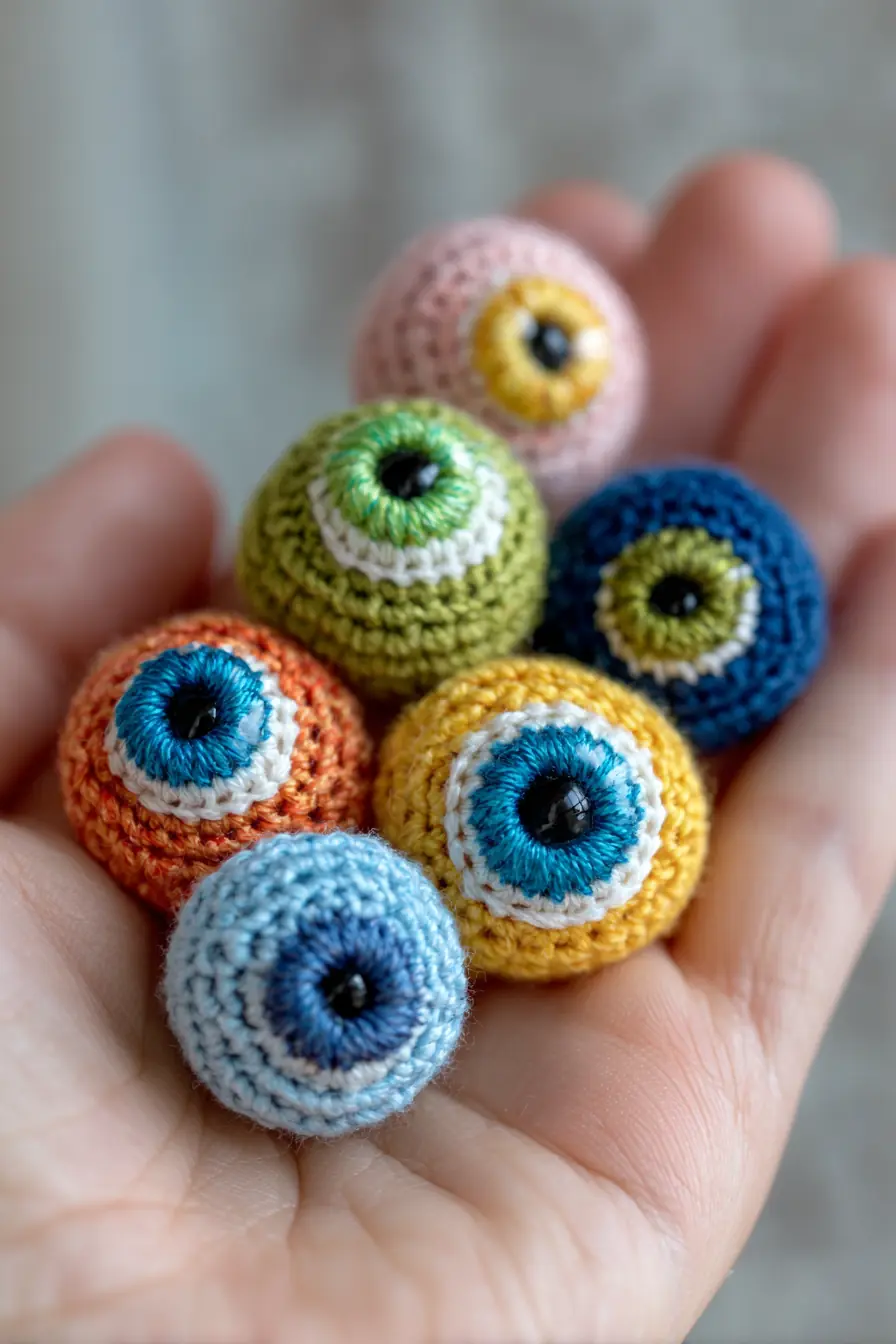
Handy, colorful amigurumi eyeballs worked in small gauge for crisp detail. Materials: fingering or DK-weight cotton yarn (pcp/smooth cotton recommended), 2.0–2.5 mm hook (one size smaller than yarn label), small amount of polyester fiberfill, tapestry needle, stitch marker and 6–8 mm black safety eyes or embroidered/stitched pupils. Stitches & techniques: magic ring, single crochet (sc), invisible decrease (sc2tog), increases, slip stitch joins and simple color-change rounds to create the iris and sclera. Size: with recommended yarn/hook these measure roughly 1–1.25 (2.5–3 cm) diameter; size will vary by yarn and tension. Safety: if items will be given to children under 3, avoid plastic safety eyes — embroider pupils securely and weave in ends; secure all seams and knot tails twice. Tips: work a tight gauge to prevent stuffing showing (use a smaller hook if needed), stuff firmly but sparingly to keep round shape, use a marker to track rounds, and weave color changes through the back loops for cleaner ridges. For extra shine, attach a tiny gloss bead or a few glossy embroidery stitches for a realistic highlight.
Amigurumi Slit-Eye Covers — Crochet Safety Eye Cozy Pattern
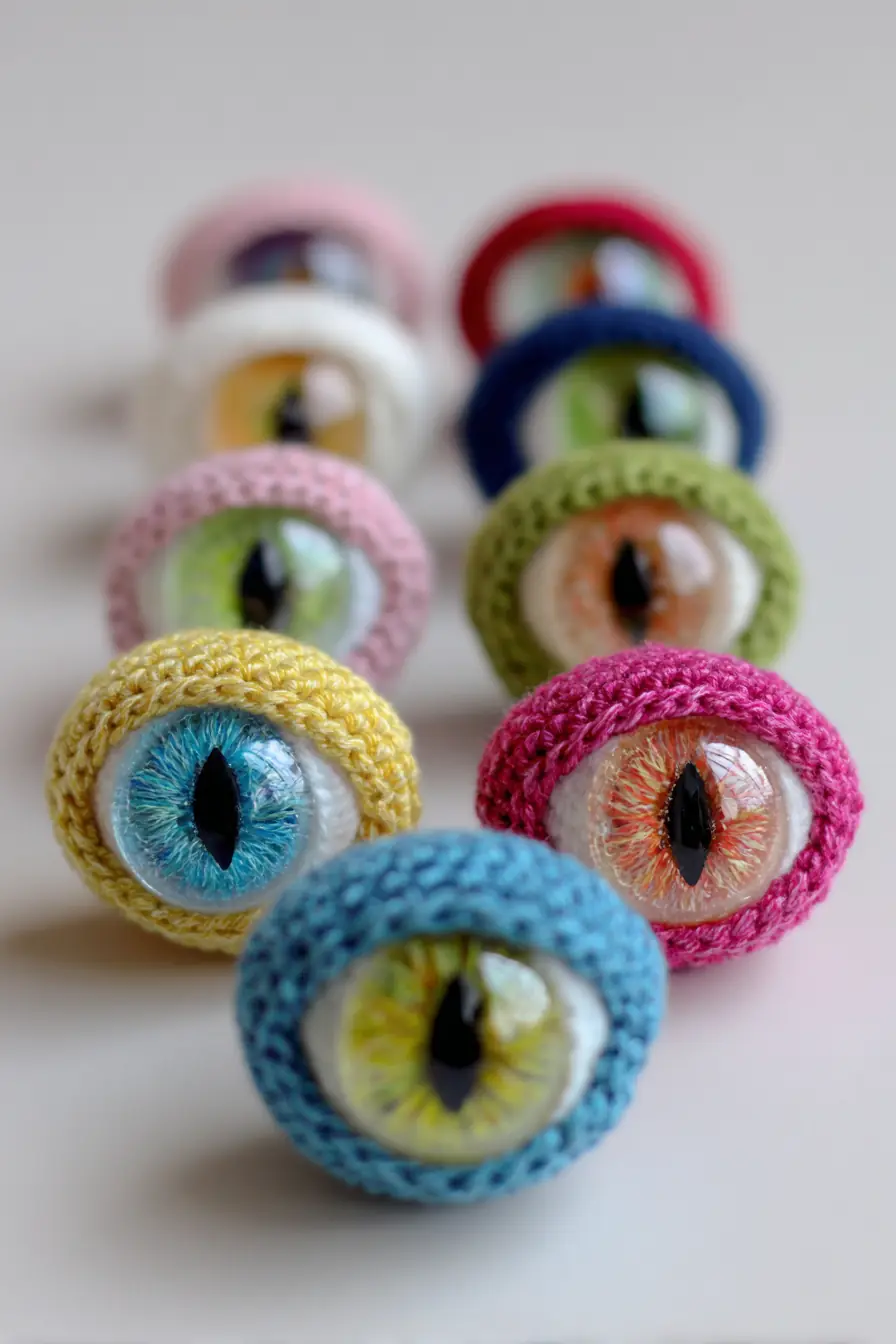
This tiny amigurumi eye cozy is made to fit glass cabochons or safety eyes and adds a colorful, finished look to monsters, dragons, or keychains. Materials: fingering or sport-weight cotton or acrylic yarn (or embroidery cotton for a crisp finish), a 1.75–2.5 mm crochet hook (adjust for tight gauge), 12–20 mm safety eyes or cabochons, tapestry needle, optional fabric glue and safety washers. Core stitches: magic ring, single crochet (sc) in continuous rounds, increases (inc), decreases (dec), and slip stitch (sl st) for the final join. Size: depending on yarn and hook you’ll get roughly 2–4 cm (0.8–1.6 in) finished diameter — test-fit your eye early. Safety: for toys destined for young children, use embroidered or securely sewn eyes instead of loose cabochons; if using safety eyes, always fit the washer and sew an extra anchoring thread through the cozy. Tips: work a tight gauge (go down a hook size if needed), place a stitch marker at round start, pre-fit the cozy to the eye before fastening OFF, weave and backstitch ends neatly, and use a tiny dab of clear fabric glue to lock cabochons in place if they won’t be handled by small children.
Amigurumi Safety Eyes & Eyelid Applique — Materials, Stitches & Tips
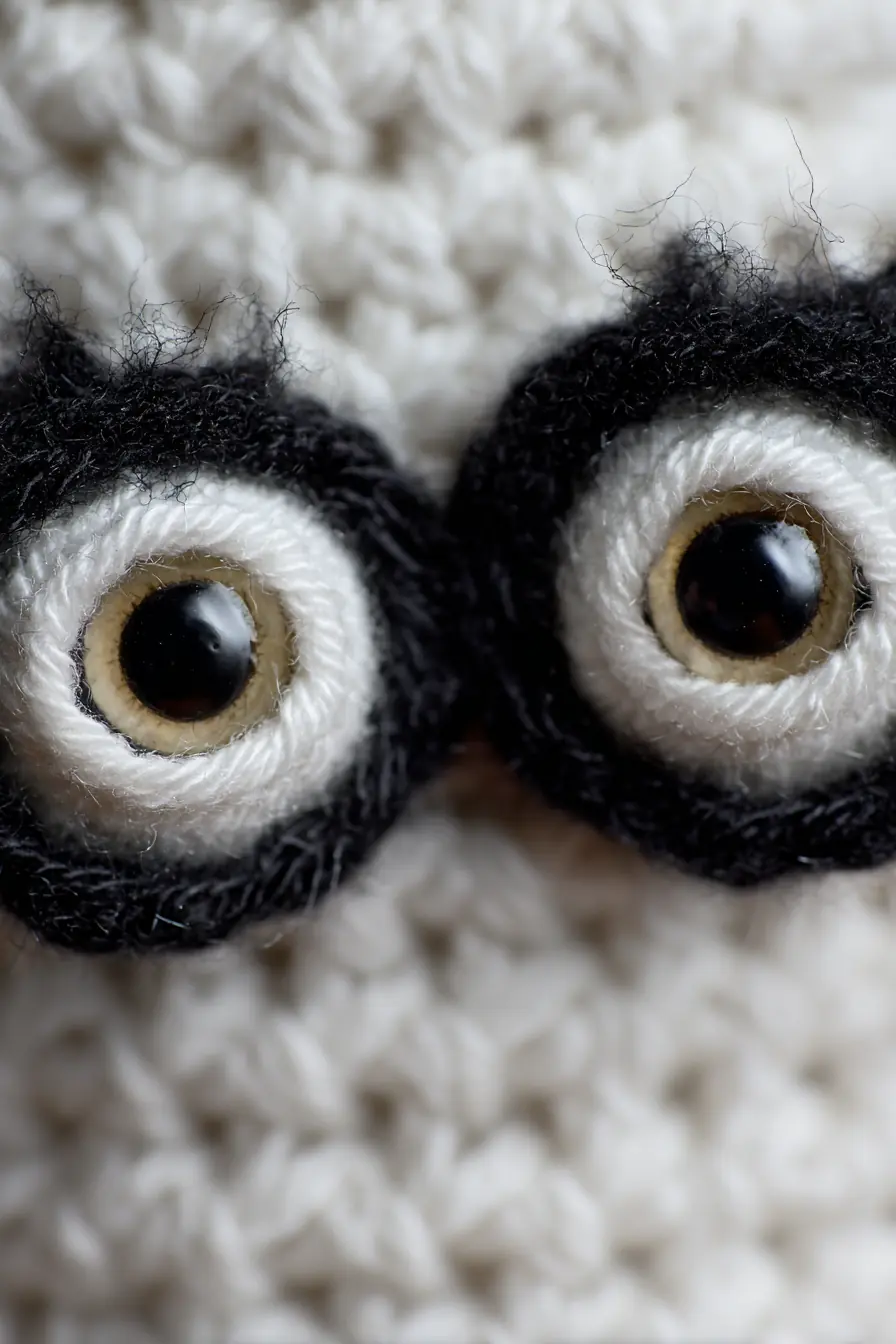
Close-up shows a classic amigurumi eye applique built with contrasting yarns for bold pupils and fuzzy eyelids. Materials: worsted-weight acrylic or cotton in main (cream) and contrast (black and white) colors, a small skein of eyelash/fuzzy yarn for lashes, 2.5–3.5 mm crochet hook (use smaller than label for tighter fabric), 10–12 mm safety eyes (or embroidered pupils), polyester stuffing, yarn needle, stitch marker and small washers. Key stitches: magic ring, single crochet (sc), invisible decrease (dec), increases (inc), and slip stitch (sl st) to finish. Size: each stitched eye ring finishes about 2.5–3.5 cm across depending on yarn/hook; safety-eye sizes listed produce a toy face roughly 8–12 cm wide when spaced as shown. Safety: always secure safety eyes with washers out of reach of children under 3 — for infants, substitute embroidered or crocheted pupils. Tips: keep a tight gauge to prevent stuffing showing, insert eyes before stuffing, weave and knot tails on the underside, add a second row of stitches for a raised eyelid, and practice consistent tension for symmetrical placement.
Tiny Amigurumi Eyes: Crochet Pattern and Safety Tips for Small Eyes
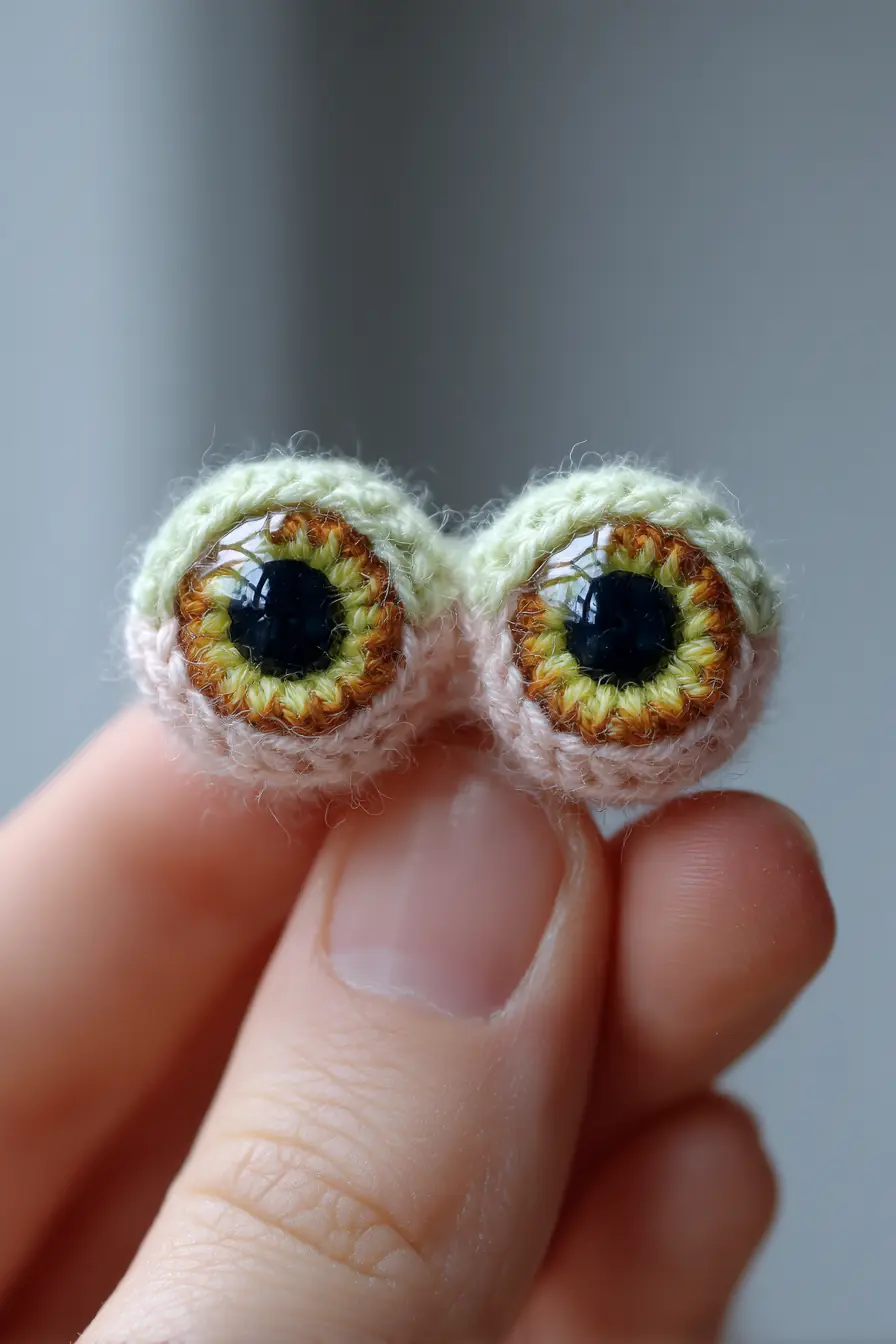
These tiny amigurumi eyes are perfect for plushies and finger puppets. Materials: fingering/sport weight cotton or acrylic yarn in three colors (white, iris, rim), a 1.5–2.5 mm crochet hook (match your yarn), 6–10 mm glossy cabochon or safety eyes (optional), polyester stuffing, tapestry needle, stitch marker, and small scissors. Key stitches: magic ring, single crochet (sc), invisible decrease (inv dec), increase (inc), slip stitch (sl st) and simple color-change rounds; use surface slip-stitch or embroidery for a detailed iris. Size: finished diameter about 1.5–2 cm (0.6–0.8 in) depending on yarn and hook. Safety: for toys intended for children under 3, avoid loose plastic parts — embroider pupils or sew felt backs instead of using detachable cabochons. Securely sew eyes to the amigurumi body with multiple passes and knot tails inside; consider adding a felt backing for extra reinforcement. Tips: work a tight gauge to hide stuffing, stuff minimally to keep shape, weave in ends as you go, and block gently if needed to flatten seams. Practice color changes on a scrap before committing to final pieces.
Mini Crochet Amigurumi Eyes - Hand-stitched Safety Eyes with Embroidered Iris
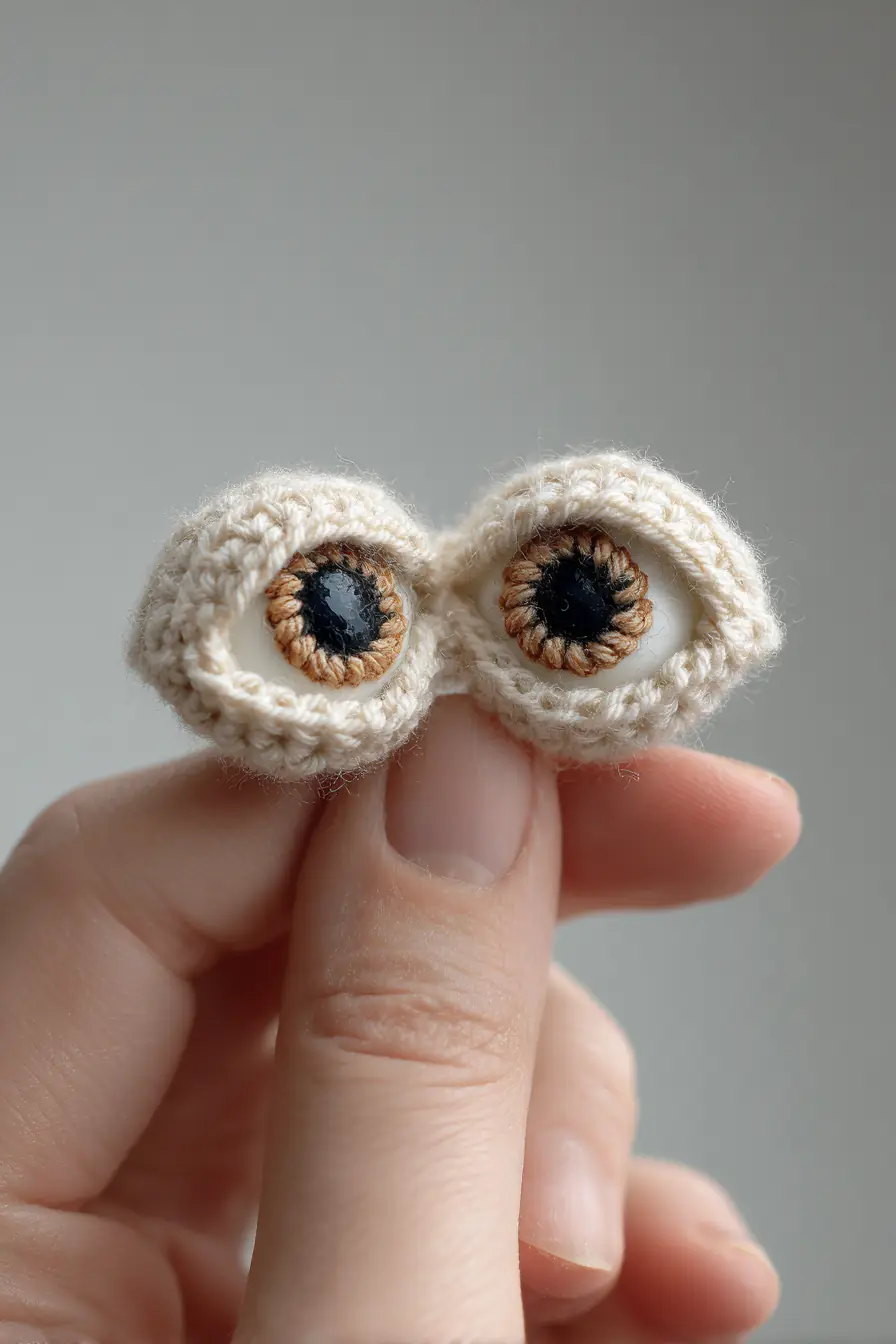
A pair of tiny amigurumi eyes worked in natural cotton yarn with a stitched brown iris and glossy pupil. Materials: light-weight cotton or cotton-blend yarn, matching embroidery floss for the iris, a size-appropriate small plastic or glass safety eye (or black embroidery for child-safe toys), a 1.75–2.5 mm hook (adjust to yarn), tapestry needle, polyester stuffing or felt backing, and a small amount of craft glue. Stitches & construction: start with a magic ring, work tight single crochets (US) with increases to shape the eye cup, finish with invisibly joined rounds or a slip stitch; the iris is created with surface crochet or satin-stitch embroidery around the pupil. Safety notes: if the toy is for children under 3, avoid removable safety eyes—embroider pupils and securely fasten backs; always sew and knot firmly and seal with a dab of fabric glue. Size: finished eyes are approximately 2–2.5 cm (0.8–1 in) across depending on yarn/hook. Tips: keep a tight gauge to hide stuffing, use stitch markers for round counting, trim loose ends inside and reinforce attachment points before final assembly.
Amigurumi Eyeballs — Cotton Yarn, Safety Eyes & Simple Crochet Sphere
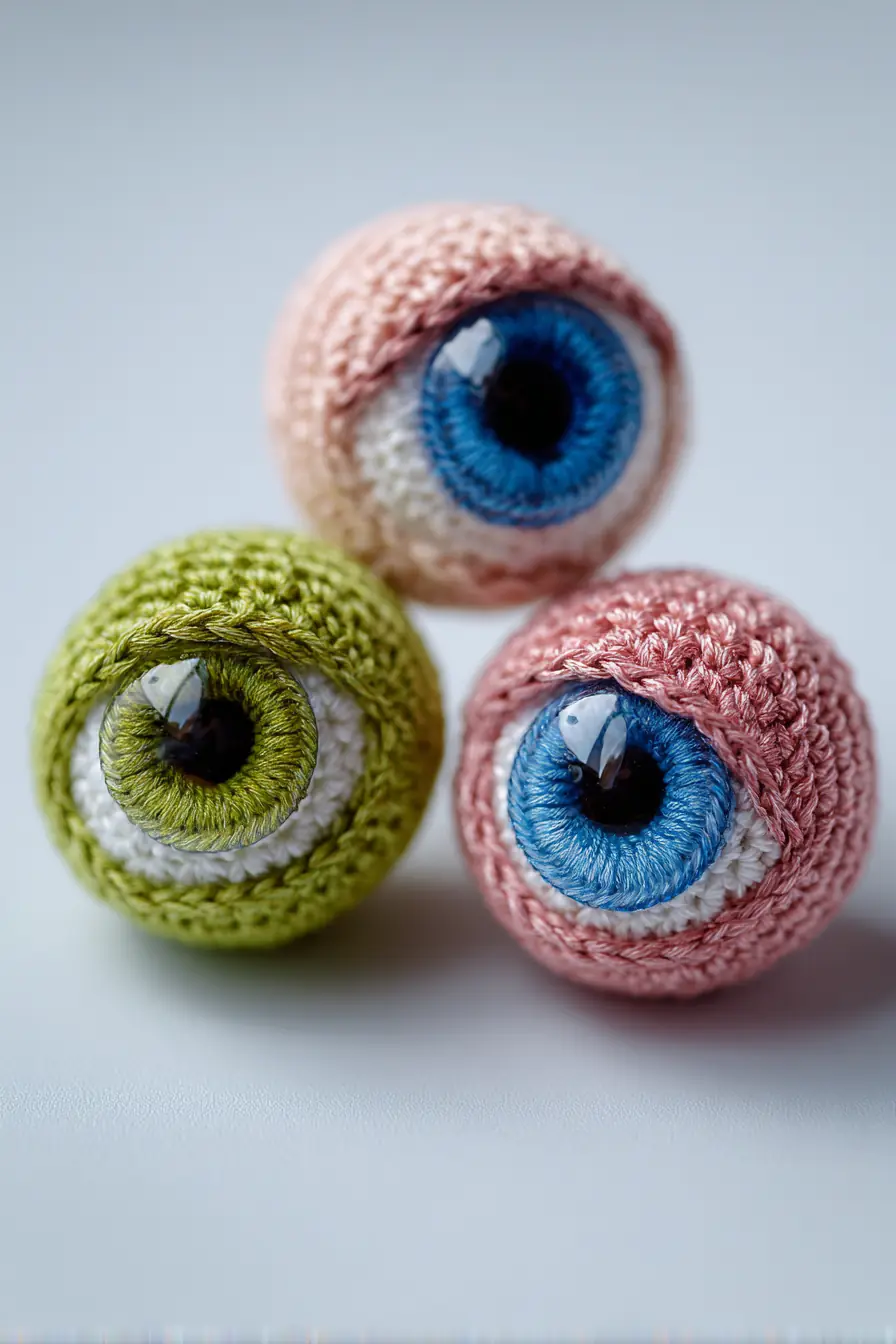
These crocheted amigurumi eyeballs are made with a tight gauge for a smooth, spherical finish. Materials: sport/DK cotton yarn (main, white and accent colors), small glass or acrylic safety eyes (10–14 mm) or embroidery thread for fully stitched irises, polyester stuffing, 2.5–3.5 mm crochet hook, stitch marker, tapestry needle and optional safety eye washers. Key stitches: magic ring, single crochet (sc), increase (inc), invisible decrease (inv dec) and slip stitch (sl st); you can add a round of half double crochet for a textured eyelid. Size: finished diameter varies by yarn and hook but typically 4–6 cm (1.5–2.5 in) for the gauge above. Safety: for toys intended for young children, avoid removable safety eyes—embroider the iris and securely weave in ends; use non‑toxic stuffing and double‑stitch seams. Tips: keep stitches tight to hide stuffing, use a stitch marker to track rounds, stuff firmly for a round shape, sew the iris or safety eye in before closing the final rounds, and block gently if needed to even the surface.
Crocheted Amigurumi Eyes — Tiny Realistic Iris, 2 cm (Pattern & Tips)
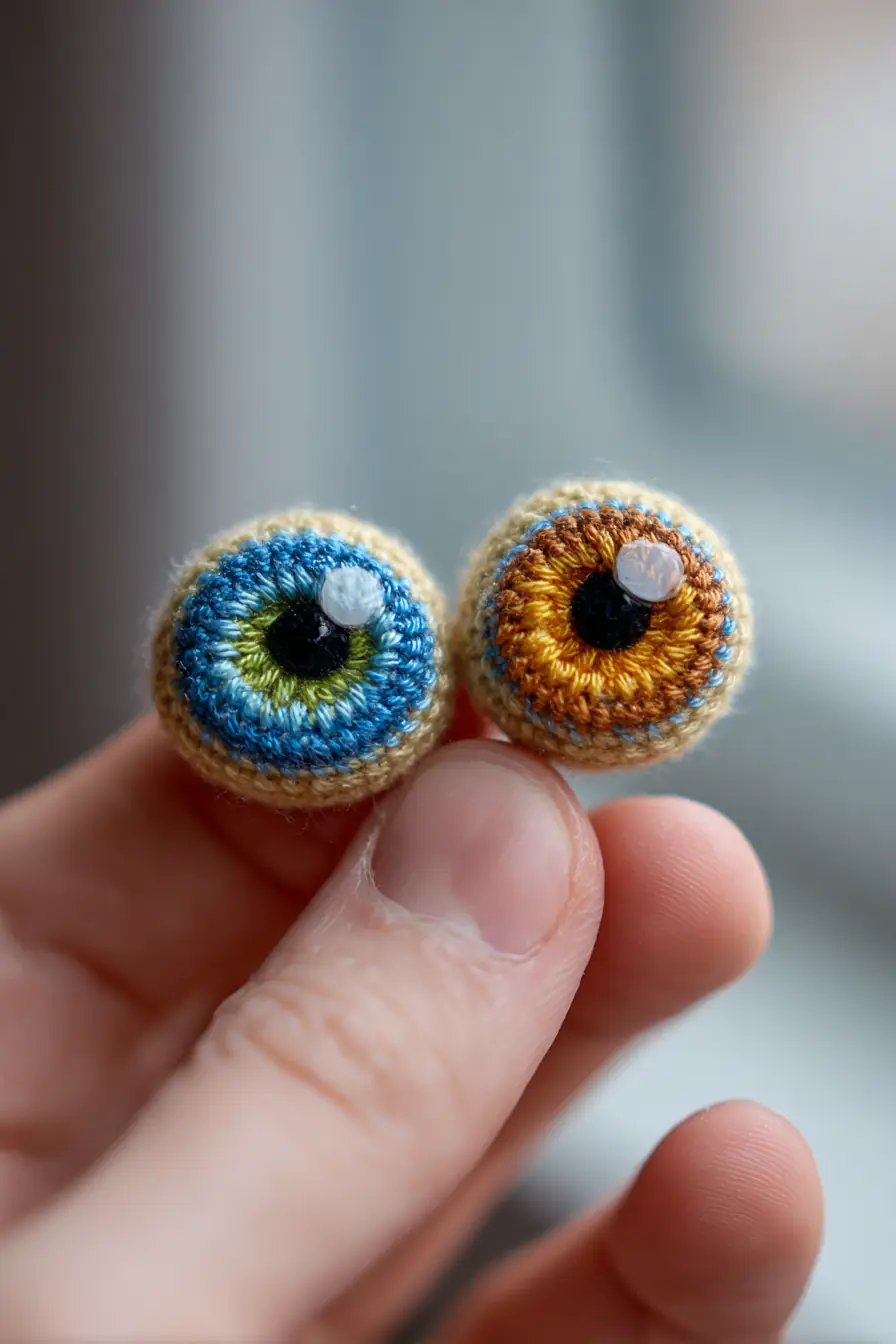
These tiny amigurumi eyes are made with fingering or sport-weight cotton for crisp color definition and measure about 1.8–2.5 cm across depending on your gauge. Materials: 8–15 g total of contrasting cotton yarn (black for pupil, 1–2 iris colors, background), a 1.5–2.5 mm hook to get a tight fabric, small doll eyes or 6–10 mm flat-back beads/cabochons for catchlights, tapestry needle, polyester stuffing (minimal) and optional safety eye backs or clear craft glue. Stitches used: magic ring, single crochet (sc), increases (inc) and decreases (dec), slip stitch (sl st) for finishing. Safety: for toys intended for young children, use embroidered eyes or properly rated safety eyes with locking washers — avoid glued beads that can detach. Size & shaping: work tight sc rounds, stuff very lightly to create a slight dome, then add the iris rounds before closing. Tips: change colors in the last loop of a stitch for cleaner color transitions, weave in ends as you go, place catchlights slightly off-center for a realistic look, and block very gently with steam if rounds pucker.
Amigurumi Eyeballs Crochet Guide - Materials, Stitches, Size & Safety Tips
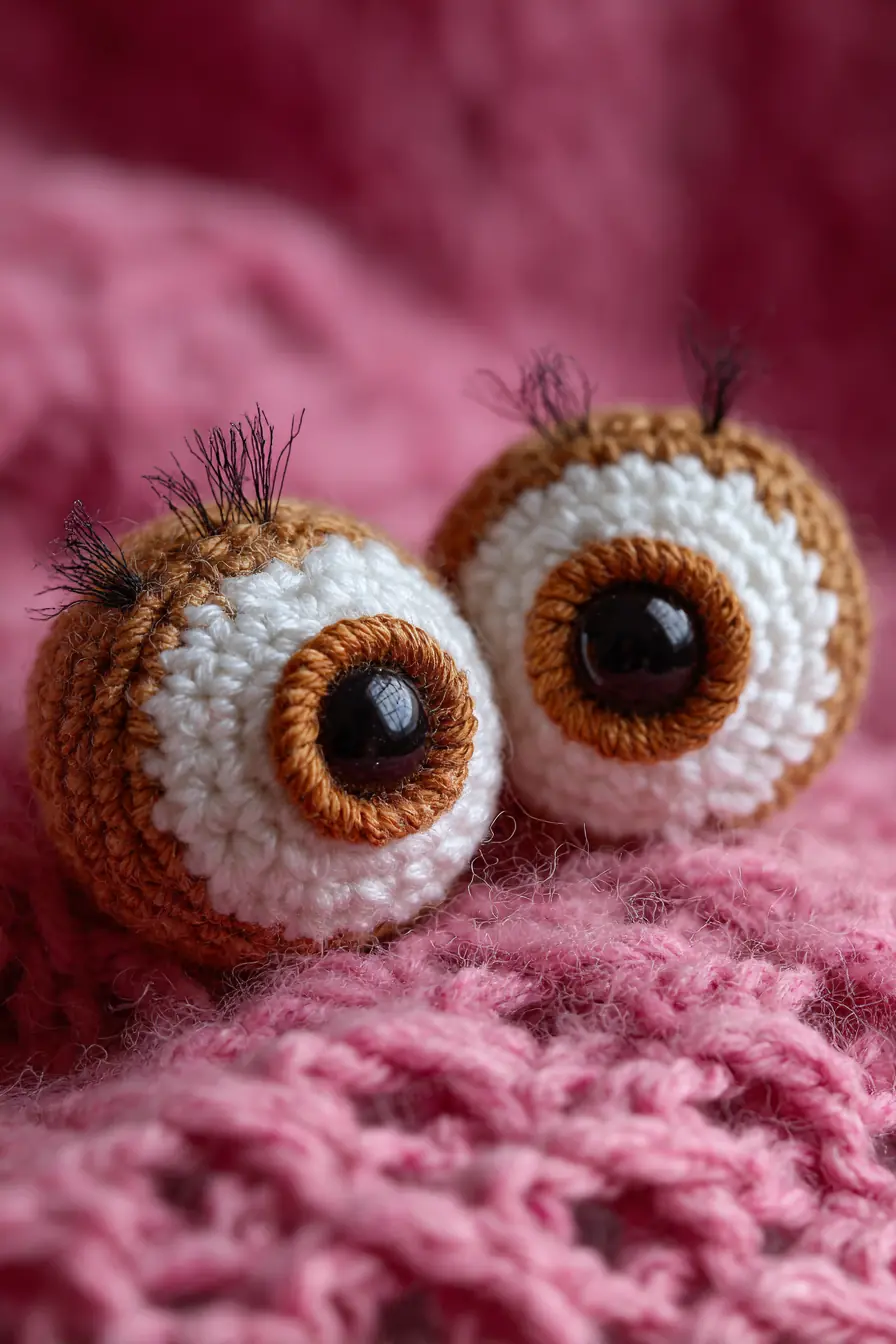
Materials: DK or worsted-weight cotton/acrylic yarn in white and brown (or your chosen colors), a 2.5–3.5 mm crochet hook, 10–12 mm safety eyes or black beads, polyester fiberfill, yarn needle, stitch marker, small scissors, and optional eyelash yarn for lashes. Stitches and techniques: magic ring, single crochet (sc), invisible decrease (inv dec), increase (inc), slip stitch (sl st), and simple color changes. Work in continuous rounds for a smooth sphere and tighten your magic ring to avoid gaps. Safety: insert safety eyes before stuffing and secure with washers; if the toy is for children under three, embroider pupils instead of using loose eyes. Weave and knot all tails securely, and avoid gluing small parts. Size: finished eyeballs measure approximately 4–5 cm (1.5–2 in) in diameter when made with DK yarn and a 3 mm hook. Adjust hook or yarn weight to change size. Tips: keep a firm tension to hide stuffing, stuff gradually for an even shape, use a stitch marker every round to track increases, and trim eyelash yarn to short tufts before securing to prevent snagging or catching.
Crochet Amigurumi Slit-Pupil Eye — Realistic Eye Motif Pattern & Tips
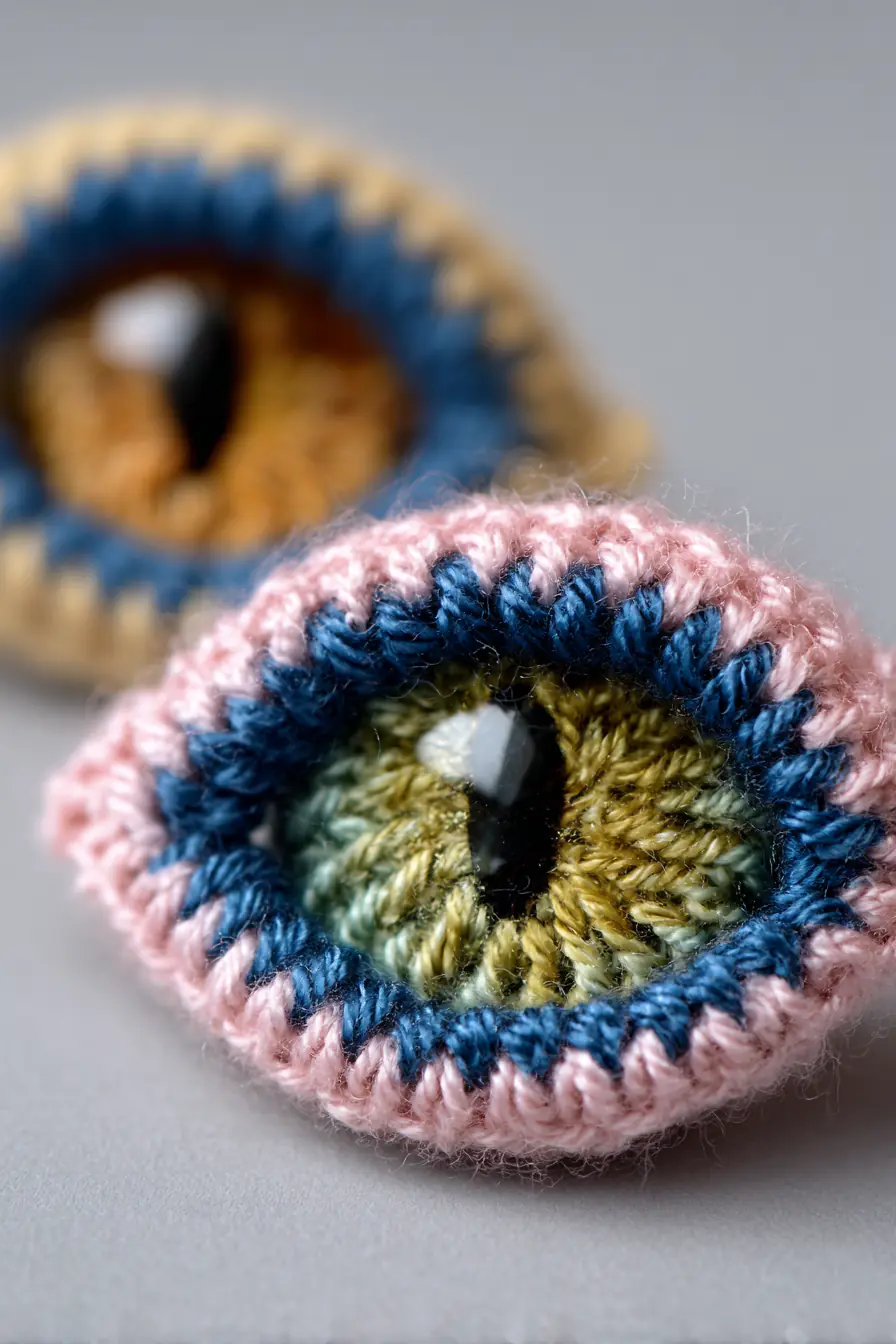
A compact, realistic amigurumi eye that works great for dragons, monsters, or stylized animals. Materials: small amounts of cotton or acrylic fingering/sport weight yarn in three colors (iris, ring, eyelid), a contrast black bead or 6–8 mm safety eye for the slit (or black yarn to embroider a pupil), fiberfill for slight stuffing, a 2.5–3.5 mm crochet hook (use smaller for a tighter fabric), tapestry needle, stitch marker, scissors and optional clear-drying craft glue or resin for a glossy pupil. Stitches & technique: begin with a magic ring, work single crochet (sc) rounds with increases to shape the iris, change color for the pupil ring, use surface slip stitch or single crochet for the eyelid row and a few decreases to shape the almond form. Safety: if the toy is for children under 3, do not use beads or loose parts — embroider the pupil and firmly weave ends; always secure safety eyes with washers and extra stitching. Size: finished eye is usually 3–4 cm (1.2–1.6 in) across depending on yarn and hook. Tips: keep a tight gauge, use a smaller hook than yarn label suggests, work in continuous rounds for a smoother spiral, block gently to set shape, and add a small stitched highlight to bring the eye to life.
Now that you’ve seen 20 amigurumi eye ideas, it’s time to experiment. Try mixing techniques—embroidered highlights with felt whites, or small safety eyes framed by eyelids—to create unique expressions. For care and safety: always securely fasten safety eyes with proper washers, avoid small detachable parts for toys intended for young children, and use fabric glue sparingly on felt to keep pieces soft. To maintain finished toys, spot-clean gently and avoid hot washing that can loosen adhesives. Photograph your favorites with natural light and a clean background for best Pinterest traction; include a close-up, a scale shot, and a styling photo for each design. Pin your results, tag pattern and material sources, and share variations—your experiments could inspire other crocheters and become the next viral amigurumi eye trend.
Share
What's Your Reaction?
 Like
0
Like
0
 Dislike
0
Dislike
0
 Love
0
Love
0
 Funny
0
Funny
0
 Angry
0
Angry
0
 Sad
0
Sad
0
 Wow
0
Wow
0